

Case Study
The small moments that define care
A university team wanted to share research into how everyday interactions affect the experience of dementia care.
The challenge was to turn research findings into a learning experience that felt practical and recognisable for care staff. The work needed to help people notice the small moments that can define person-centred care: a tone of voice, a pause, a routine, a choice, or the way someone is included in a conversation.

Turning dementia care research into drama-based learning
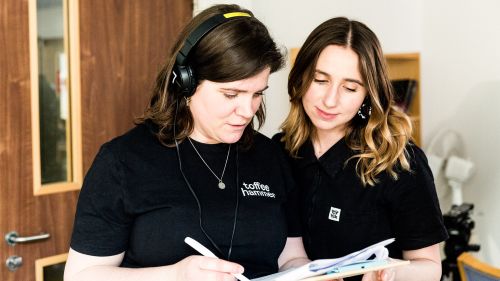

We produced a series of short films based on real situations from care settings. Each drama focused on a familiar interaction, showing how communication, relationships and small behaviours can influence a person’s sense of dignity and sense of belonging.
Our role combined storytelling, learning design and production. We worked with the university team to translate research into credible scenarios that care staff could recognise from their own working lives.
The films were designed to support reflection and discussion, not to tell people what to do. By watching realistic moments play out on screen, care staff could explore what person-centred care looks like in practice and how small changes in behaviour can alter the experience of care.
The result was a drama-based learning resource that helped make dementia care research applicable to real-life practice.